Hazardous & Dead Tree Removal
Not every scary tree is dangerous, and not every dangerous tree looks scary. We’ll tell you which one you have, and put it in writing.
Warning signs worth a professional look
An opinion you can hold us to.
Here’s our bias, stated up front: we save trees when trees can be saved. A tree with a structural flaw can often be cabled, thinned, or reduced into safety for a fraction of removal cost, and we’ll always tell you when that’s true. When it isn’t, we’ll say that plainly too.
A dead or dying conifer near a target: your house, the neighbor’s garage, the kids’ trampoline — is not a wait-and-see situation. Dead wood gets more brittle and less predictable every month it stands, and it makes the eventual removal more dangerous and more expensive.
If you need it for a neighbor conversation or an insurance file, we can document the tree’s condition in writing. In Washington, a documented warning about a hazardous tree changes who’s liable when it fails, that piece of paper matters.
What hazard work costs
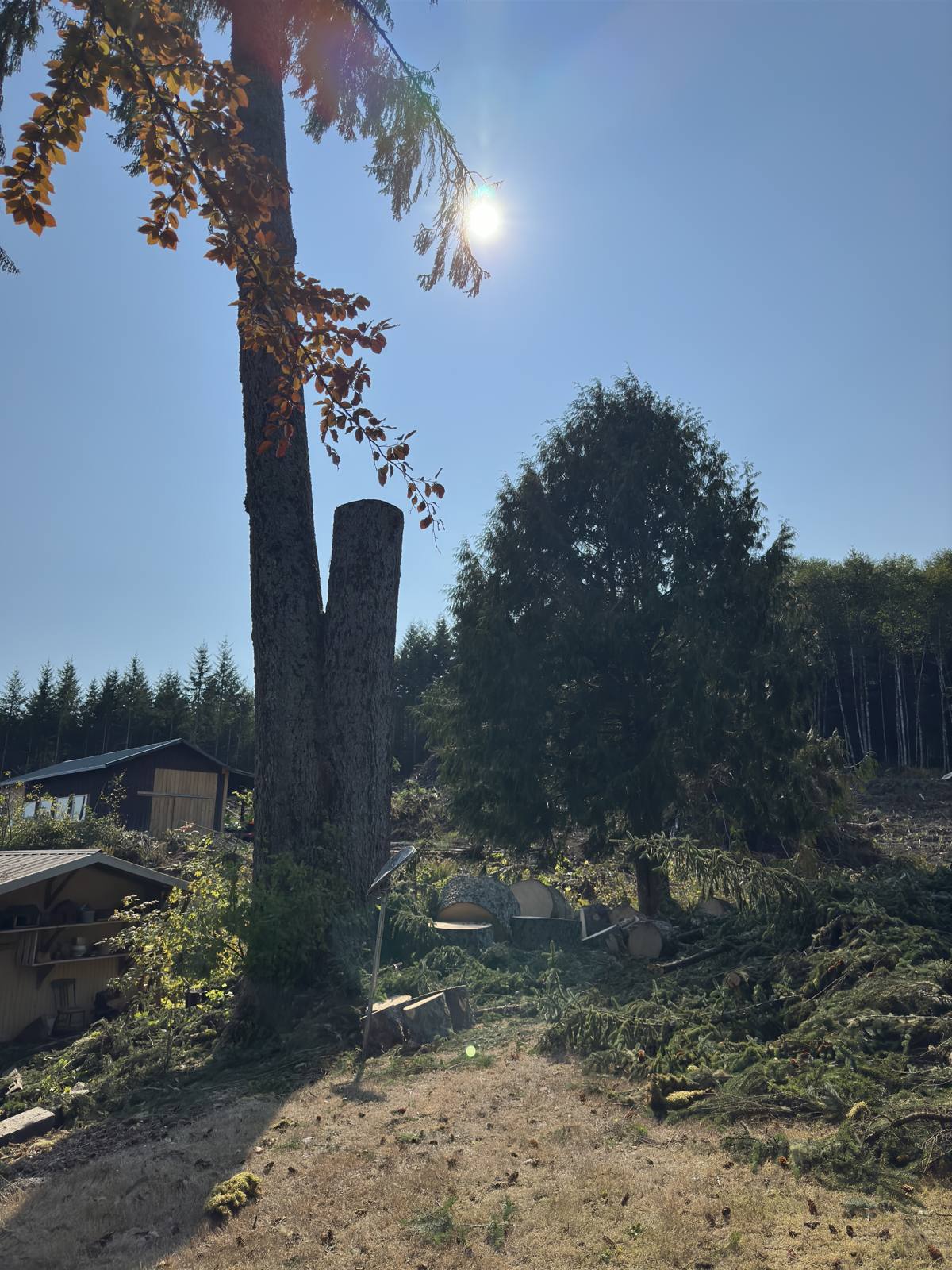
Dead-tree removals typically price 25–50% above a comparable healthy tree, because dead wood can’t be climbed and rigged the same way: it fails without warning, so the work is slower and more conservative, sometimes requiring a lift or crane.
That premium grows the longer a dead tree stands. The cheapest version of this job is the one done soon after the tree dies, while the wood still has some integrity.
Assessments are part of any free estimate. Written condition reports for insurance or neighbor documentation are available. Ask when you call.
Frequently asked questions
Tree keeping you up at night? Get a straight answer this week.
No-pressure advice, sometimes the honest answer is “your tree is fine.”