
Tree Cabling & Bracing
The tree everyone told you to cut down can often be engineered safe instead. Cables and brace rods are how big trees with structural flaws get decades more life.
Trees that are candidates for cabling
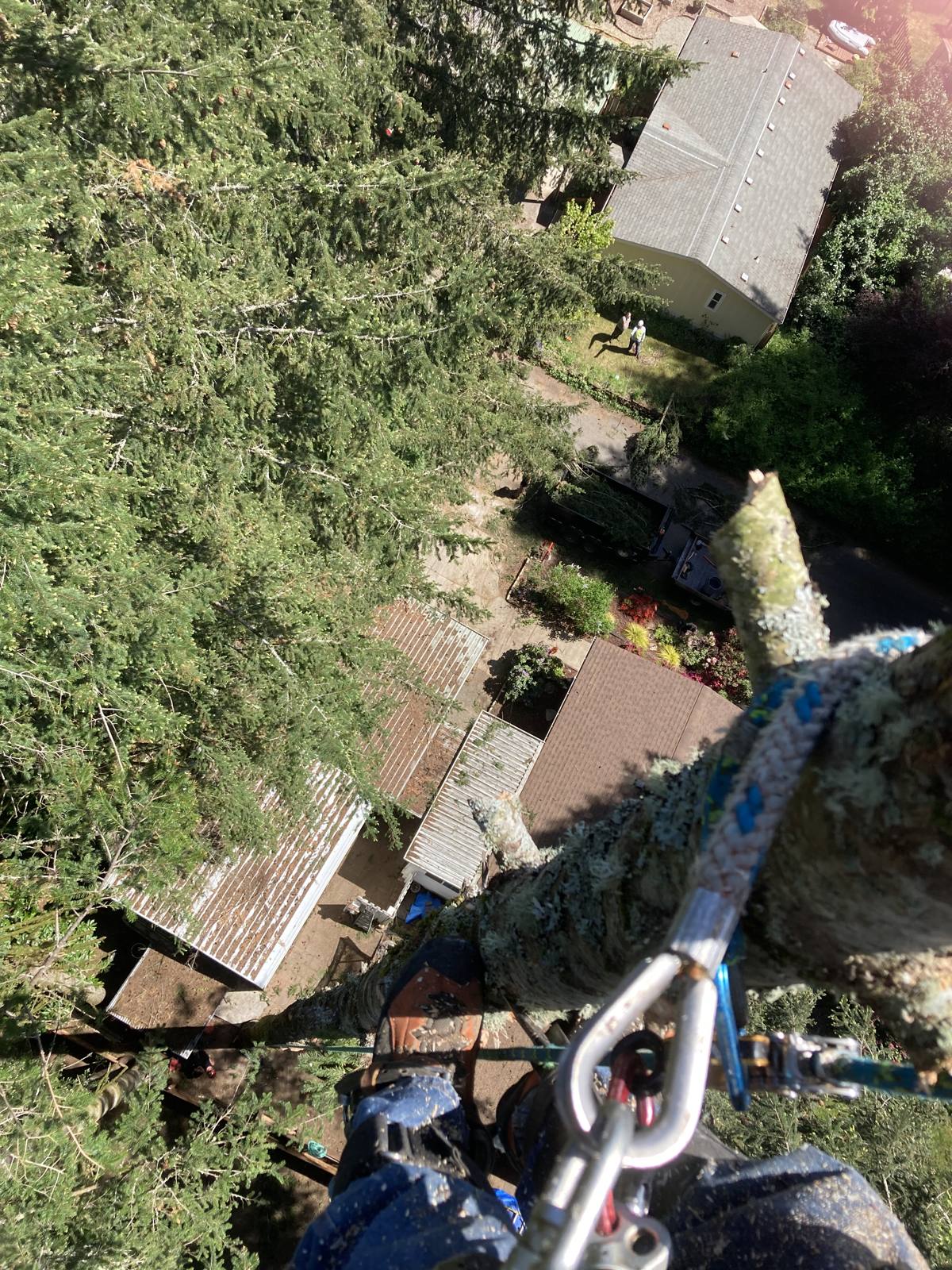
Cables up high, rods where it counts.
Cabling installs high-strength cable in the upper canopy, limiting how far weak stems can move apart in wind. The tree keeps swaying — trees need movement, but the failure motion is taken away. Bracing adds threaded steel rods through a split or weak union lower down, holding the wood itself together.
The two usually work as a team: the rod immobilizes the crack, the cable removes the leverage that would tear it open again. Installed correctly and inspected periodically, hardware like this routinely serves 25 years and more.
This is genuine arborist work — placement height, hardware sizing, and pre-install pruning decide whether the system protects the tree or wounds it. It’s the opposite end of the trade from wrapping a chain around two trunks, which we’ve been called to undo more than once.
What cabling and bracing cost
Typical installed range: $300–$1,500 per tree. A single static cable on a co-dominant fir sits at the low end; dynamic (rope-style) systems run a bit more; threaded brace rods add $150–$800 depending on what the split requires; a big multi-point system on a large legacy tree can pass $2,000.
Almost every install starts with weight-reduction pruning of the supported stems, sometimes quoted separately, so ask. We itemize it either way.
Compare that against removing and replacing a mature tree — thousands of dollars, plus thirty years of waiting for shade, and cabling is one of the best-value moves in tree care. It’s also almost unknown around here: most local companies simply don’t offer it.
Frequently asked questions
Before you cut that tree down — ask us if it can be saved.
No-pressure advice, sometimes the honest answer is “your tree is fine.”