Pruning & Trimming — Crown Care

Tree Trimming & Pruning — Crown Care for PNW Trees

Good pruning is invisible: the tree just looks right, rides out storms, and stays healthy for decades. Bad pruning is a wound that never closes. We do the first kind.

When to call us

Signs your trees are due for crown work

  • Dead or hanging branches over the roof, driveway, or play areas
  • The canopy is so dense that wind shoves the whole tree instead of passing through
  • Low limbs blocking gutters, chimneys, walkways, or the view from the porch
  • It’s been more than 3–5 years since a mature tree was last touched
  • A previous crew “topped” the tree and the regrowth looks wild
What we actually do up there

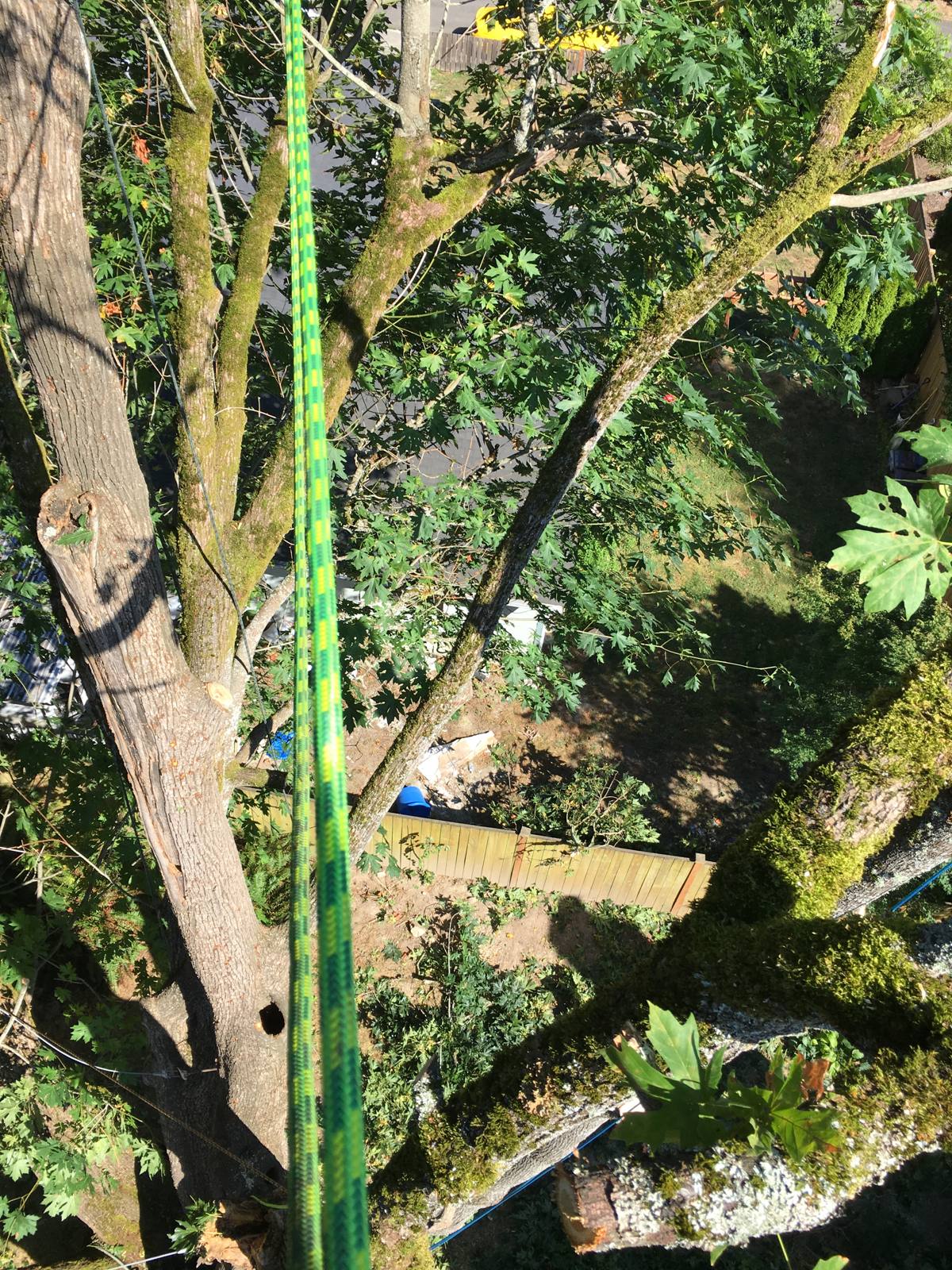
Four kinds of crown work, each with a purpose.

Crown cleaning removes dead, diseased, and rubbing branches: the housekeeping every mature tree needs. Crown thinning opens the canopy so wind moves through instead of pushing against it, which is the heart of wind-sail reduction here in windstorm country.

Crown raising lifts the lowest limbs for clearance over roofs, drives, and sight lines. Crown reduction carefully brings a tree’s height or spread down using proper cuts at lateral branches: the correct answer where others reach for topping.

One promise we’ll put in writing: we never top trees. Topping starves the tree, triggers weak regrowth that breaks in storms, and ruins its structure for good. Any company that offers it is telling you something.
Four kinds of crown work, each with a purpose.
Straight talk on cost

What pruning costs, honestly

Trimming work in our area typically runs from a couple hundred dollars for a small ornamental to $1,500+ for a full crown program on a big conifer or mature maple. The drivers are the same as removal: size, access, and how much the crew has to rope and lower rather than drop.

Timing matters more than most people know. For most PNW species, the dormant season (late fall to late winter) is ideal. Oaks are the exception — pruning them April through October risks spreading oak wilt, so we schedule oak work for the cold months. Fall pruning of most trees (September–October) pushes tender growth right before frost, so we generally avoid it.

Regular light pruning every few years is far cheaper than one desperate rescue after storm damage. That’s the whole logic of a maintenance relationship.

Real questions, straight answers

Frequently asked questions

In practice they overlap. Pruning is health and structure work — removing dead, diseased, and poorly attached wood so the tree grows strong. Trimming leans toward appearance and clearance — shape, size, and keeping limbs off the house. A good crew does both in one visit with the same proper cuts.

The branch collar: the swollen ring where a branch meets the trunk. It contains the tissue the tree uses to seal the wound. Flush cuts through the collar and long stubs both invite decay that never heals. And the main top of a mature tree should never be lopped off; that’s topping, and it ruins trees.

In a forest, nothing — trees manage. In a yard, the canopy gets dense and heavy, inner branches die from lack of light, and the whole crown starts catching wind like a sail. That’s when otherwise healthy trees start losing limbs onto whatever is below them, or worse, going over at the roots.

Rule of thumb: no more than about 25% in a single season, and less for older trees. Beyond that you’re starving the tree of the leaves it needs to feed itself, and it responds with stressed, weak growth. Anyone who wants to strip half the crown in one go is not doing the tree a favor.

Early fall for most species (new growth gets frozen), and April through October for oaks (oak wilt risk). Storm-damaged or hazardous limbs are the exception — those get handled whenever they appear, because the risk of waiting outweighs the timing.

Want your trees storm-ready — and still standing?

No-pressure advice, sometimes the honest answer is “your tree is fine.”