Tree Removal in Pierce County & the South Sound
When a tree truly has to come down, it should come down in controlled sections by an insured crew, not in one prayer and a push. That’s the job we’ve done for 25 years.
Signs a removal is the right call
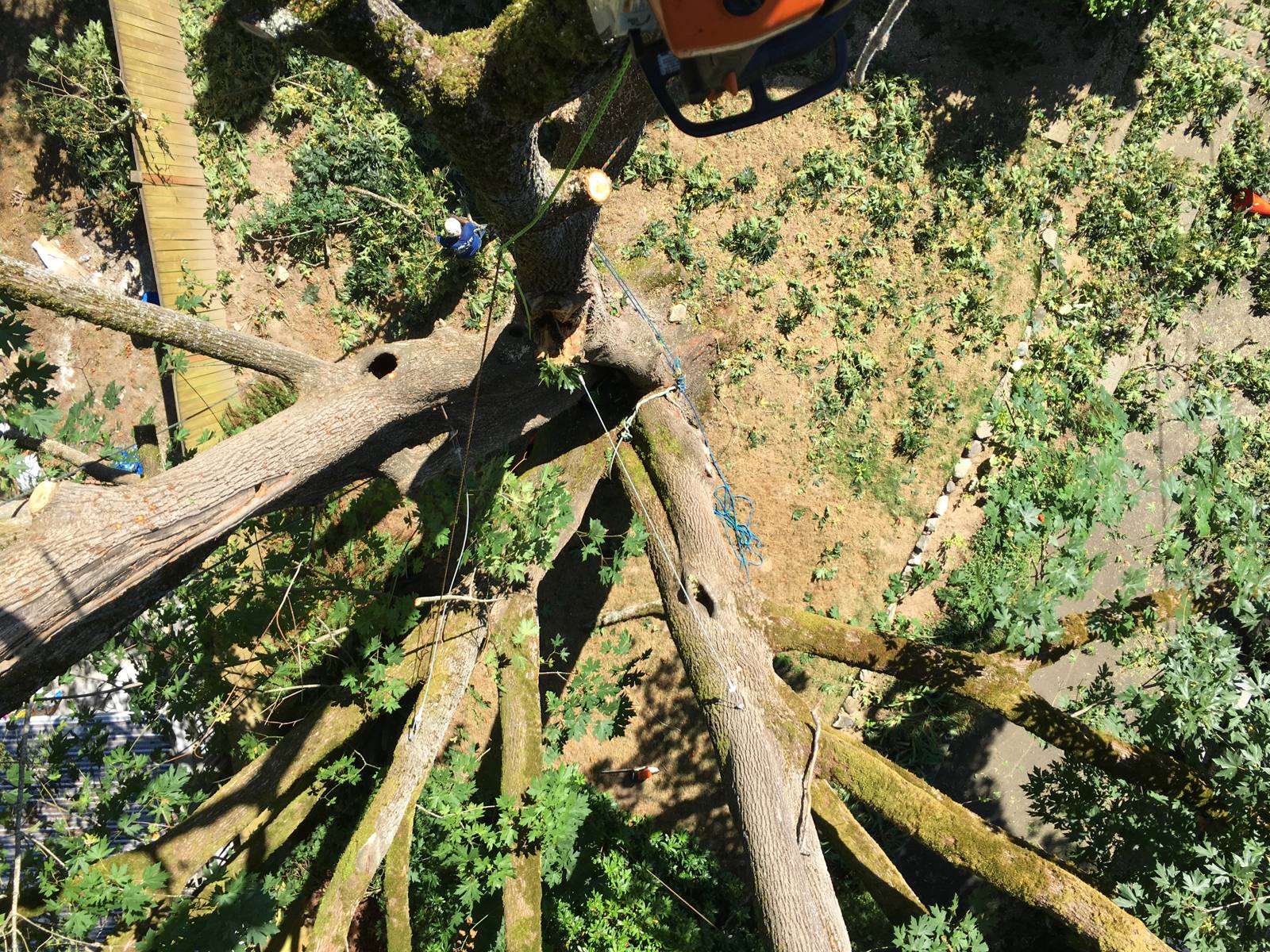
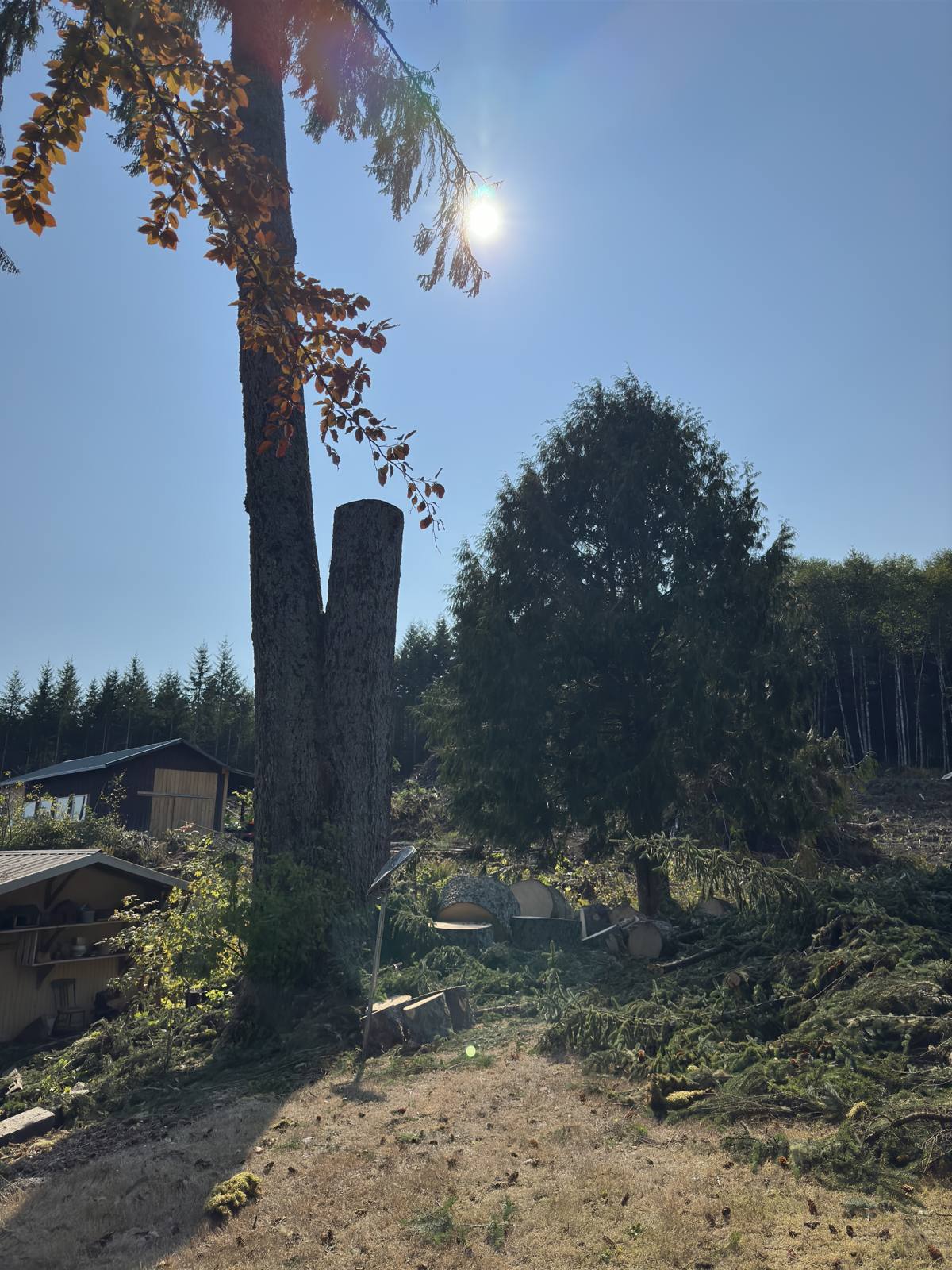
Rigged and lowered, piece by piece.
Most of our removals happen in tight quarters: over roofs, fences, decks, gardens, power service lines. We climb, rig, and lower each section on ropes instead of dropping anything blind. Your yard is a work zone with a plan, not a gamble.
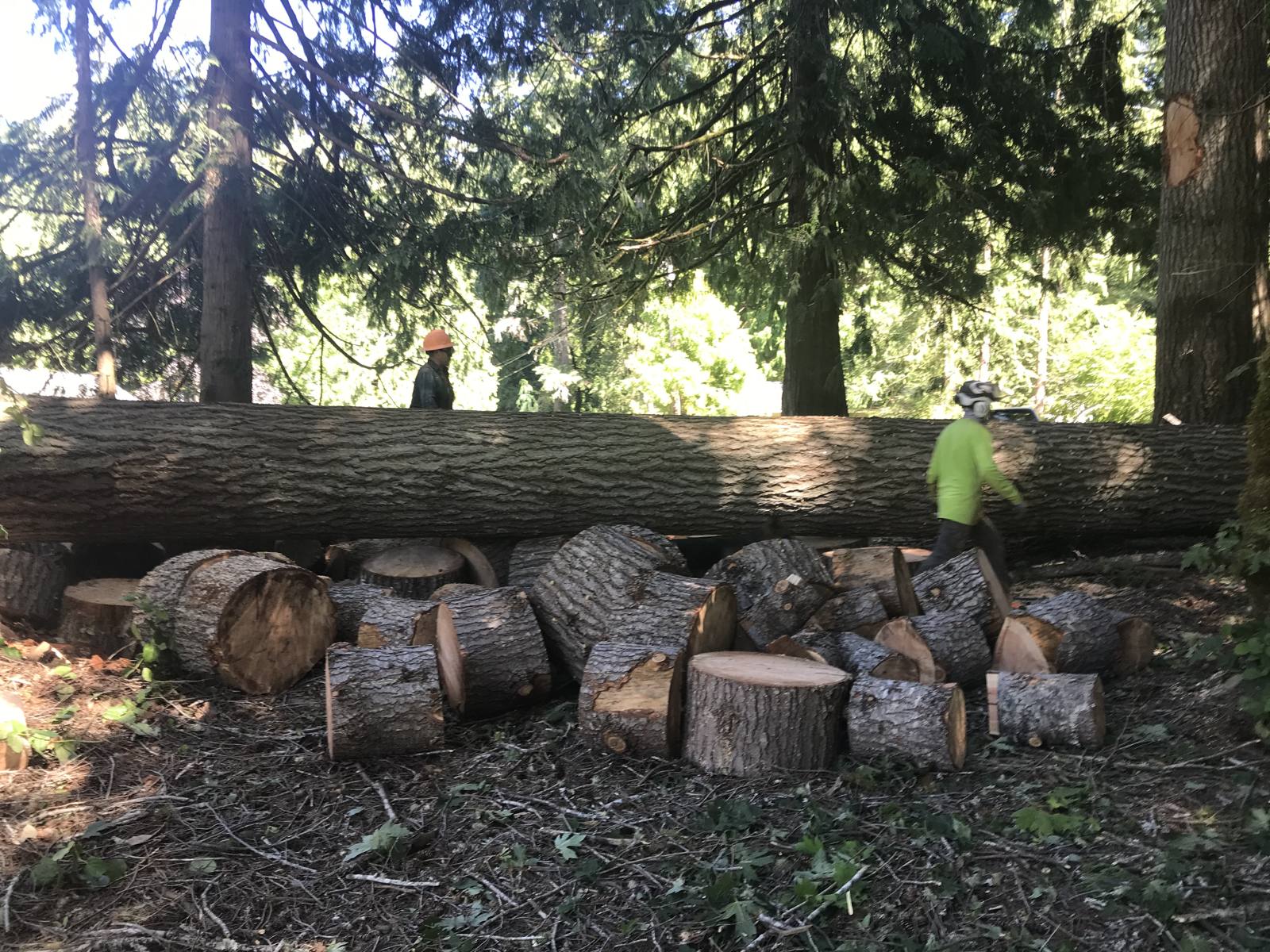
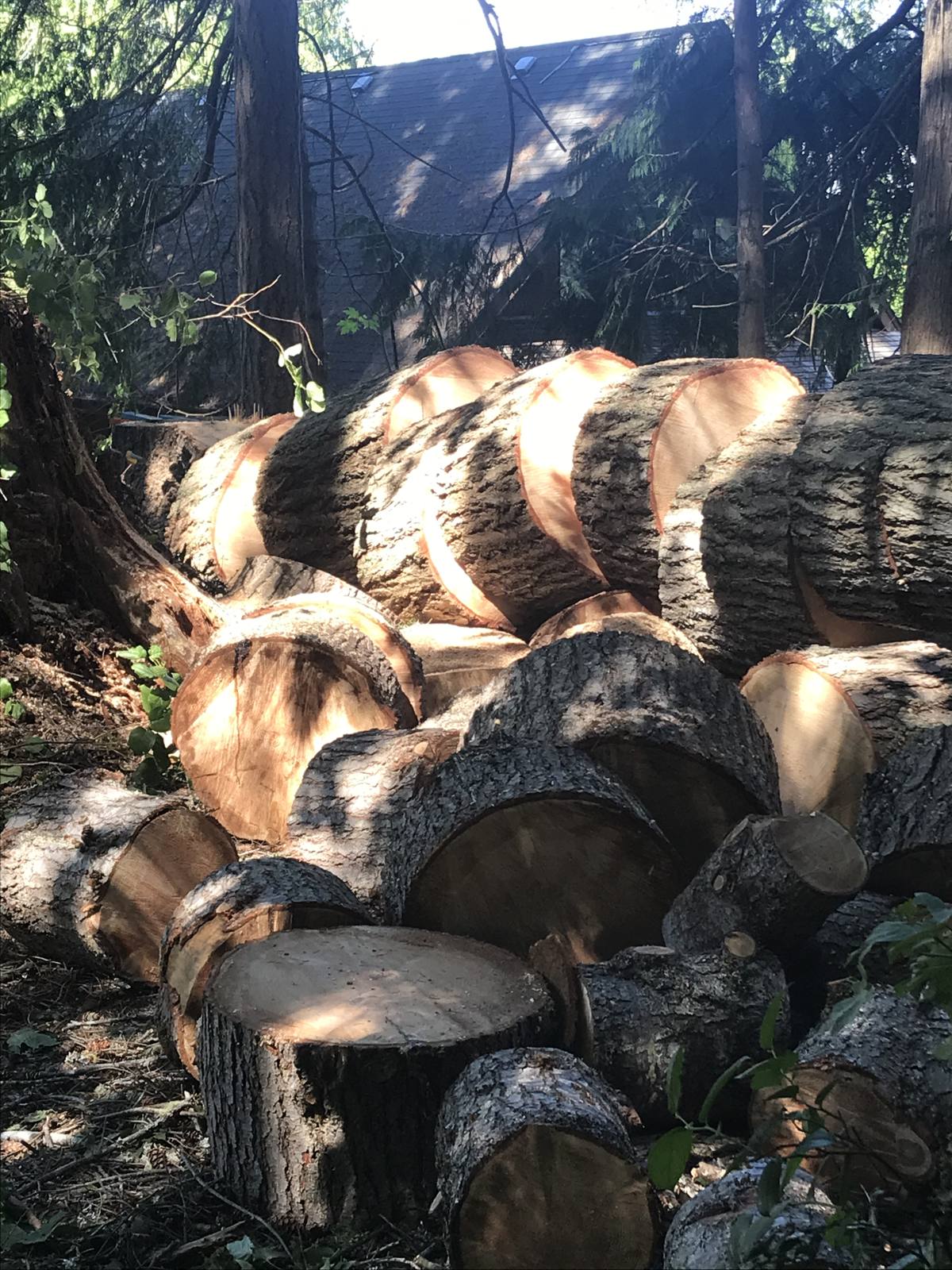
Every quote spells out what’s included — felling, chipping, hauling, and cleanup, so you’re never surprised by an extra line item after the saws stop. Want the wood for firewood? Tell us and we’ll buck it to length and leave it stacked; it usually saves you money.
And before we quote a removal, we’ll tell you honestly if the tree doesn’t need to die. Thinning or cabling saves a lot of trees other companies would happily bill you to cut.
What tree removal really costs around here
National averages run roughly $400–$1,100 per tree, but Western Washington runs 20–40% higher, because our trees are simply bigger. A mature Douglas fir or western red cedar at 80–120 feet is a different job than the 40-foot maples those national numbers are built on.
Around Pierce County, expect small trees (under 30 ft) in the hundreds; mid-size trees (30–60 ft) roughly $800–$2,000; large conifers (60–80 ft) $1,500–$4,000; and very large or hazardous giants can go beyond that when cranes or traffic control get involved.
What moves the number: height and trunk diameter, what’s underneath the tree, how close trucks and chippers can get, the tree’s condition (dead trees are more dangerous to climb), and whether stump grinding and hauling are included. We put every factor in writing.
One more thing worth knowing: the City of Lakewood and several other local jurisdictions require permits for some removals, especially in critical areas. We’ll flag it before any saw starts.
Frequently asked questions
Got a tree that might need to come down? Let’s look at it together.
No-pressure advice, sometimes the honest answer is “your tree is fine.”