24-Hour Emergency Tree Removal
A tree through the roof at midnight is a bad night, not a negotiation. Call, we answer, we come. Then we help you document everything for the insurance claim.
Call the emergency line right now if
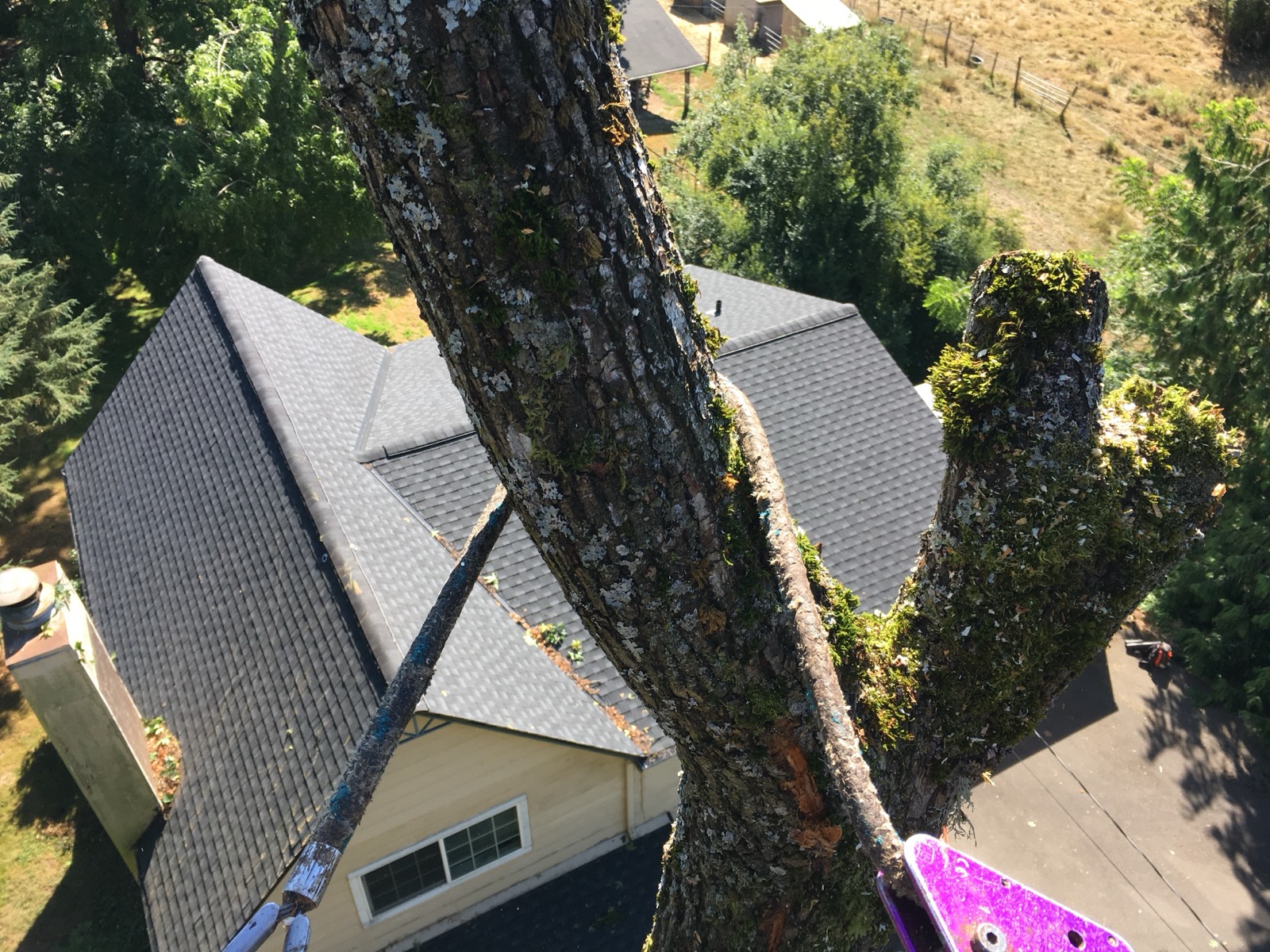
Calm hands at the worst moment.
Storm-damaged trees are the most dangerous work in this trade: loaded with tension, resting where they don’t want to rest, ready to move when a cut releases them. This is exactly the wrong moment for an uninsured guy with a chainsaw. Our crew rigs, relieves the load in the right order, and takes the tree off in controlled pieces.
We photograph everything before and during the work: the damage, the tree, the failure point. Your insurance adjuster will want those photos, and having them from the first hour makes the claim smoother.
After the storm passes, we’ll walk the rest of your trees if you want. The tree that failed usually has siblings with the same weakness, and an hour of preventive crown work is a lot cheaper than the next emergency.
Emergencies, insurance, and money
Straight answer: emergency work costs more than scheduled work, because it pulls a crew out at night in bad conditions to do the most dangerous version of the job. What we won’t do is treat your bad night as a jackpot. You get the same itemized quote discipline as every other job.
On insurance: homeowners policies generally cover tree removal when a tree hits a covered structure: the house, garage, or fence. Payouts for the removal itself are usually capped somewhere around $500–$1,000 (your deductible applies), while the structure repair is the larger claim. A tree that falls in the open yard without hitting anything typically isn’t covered at all.
If a NEIGHBOR’S tree hit your house, your own policy still handles it in most cases — unless the tree was visibly dead or dangerous and they knew. That’s where documented warnings and arborist reports become important. We can help with that documentation.
Frequently asked questions
Storm did its worst? We answer at 2am.
No-pressure advice, sometimes the honest answer is “your tree is fine.”