
Wind-Sail Reduction: Storm-Proof the Trees You Keep
A dense canopy catches wind exactly like a sail. Every November, that’s how healthy firs end up on rooflines. Thinning the sail is how they don’t.
Trees that need their sail reduced
Let the wind through, not against.
When a storm hits a dense crown, the whole load transfers down the trunk to the roots. Soil saturated by weeks of PNW rain holds worst exactly when the wind blows hardest. That’s why healthy green trees go over in November with their root plates in the air.
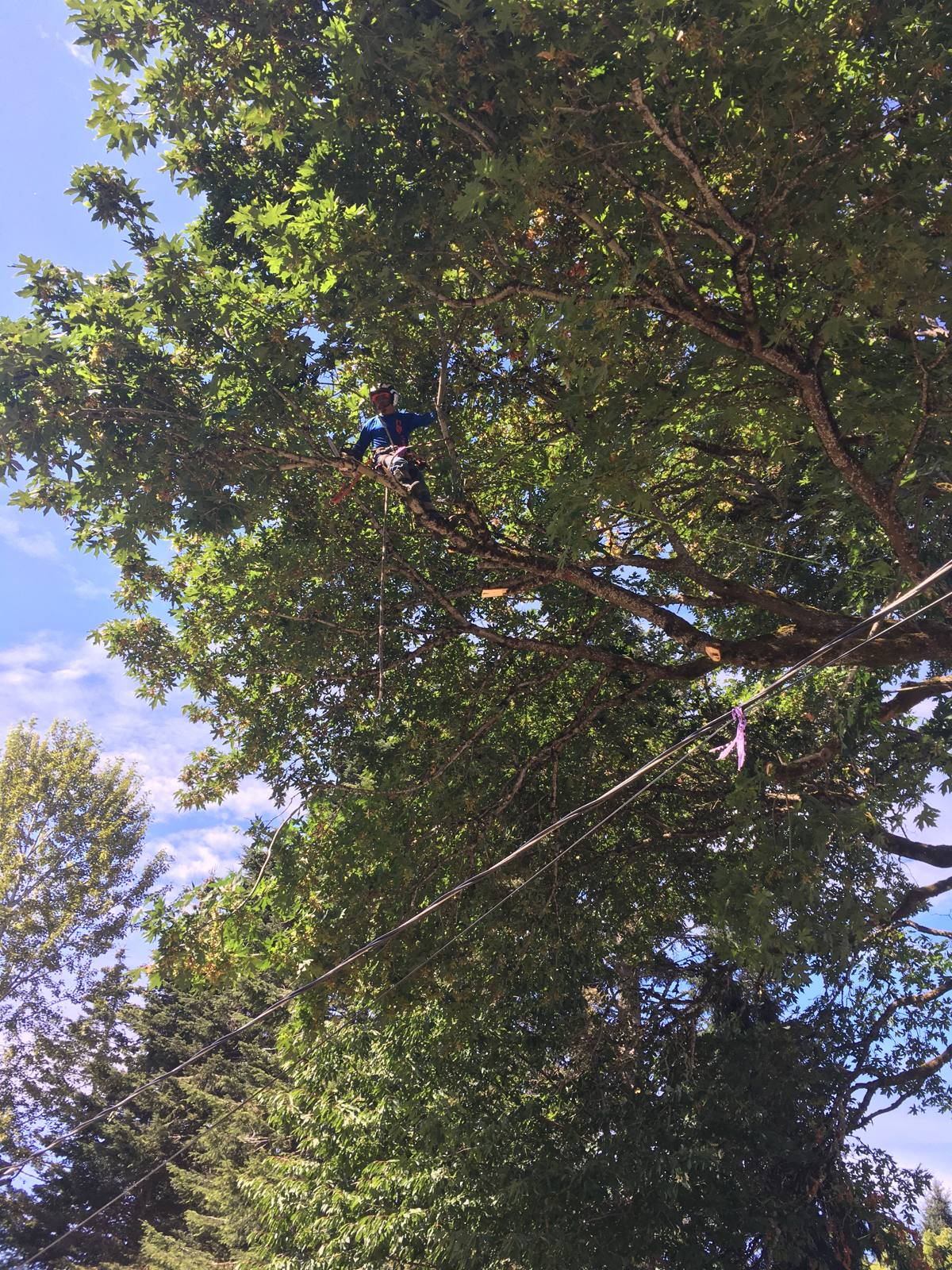
Wind-sail reduction selectively thins interior and redundant branching — typically 15–25% of the canopy, so gusts pass through the crown instead of shoving it. The tree keeps its shape, its health, and its dignity. Done with proper cuts, you can barely tell we were there; the wind can.
It pairs naturally with cabling on multi-top trees and is the heart of any pre-winter storm-prep visit. One crew day in September beats one emergency at 2am in December.
What wind-sail work costs
Wind-sail reduction prices like focused crown thinning: usually a few hundred dollars for a single mid-size conifer up to $1,200–$1,800 for a very large fir requiring full-canopy rope work. Grouped trees get grouped pricing — protecting a line of three costs far less than three separate visits.
Compare against the alternative it prevents: an emergency removal off a roof, an insurance deductible, and a repair bill. Storm-prep thinning is the cheapest insurance a treed PNW lot can buy.
Best window: late summer through fall, before the storm season the work exists for. We book those weeks out. Call before the first big front is on the map.
Frequently asked questions
Storm season is coming. Ready your big trees now.
No-pressure advice, sometimes the honest answer is “your tree is fine.”