Why Do Healthy Trees Fall in PNW Windstorms?
Every November the same scene repeats across the South Sound: a green, healthy fir lying across a fence with its entire root plate tipped up like a trapdoor. No rot, no disease, no warning. Neighbors say “but it was healthy!”, and they’re right. Health was never the question. Physics was.
The three-part recipe
Saturated soil: by late fall, weeks of rain have turned the root zone soft exactly when the biggest winds arrive: the ground holds worst at the moment it’s asked to hold hardest. The sail: a dense, unthinned canopy doesn’t let gusts pass through; it catches them like a spinnaker, transferring tons of lateral load down the trunk to those wet roots. Lost neighbors: trees that grew up in forest shared the wind with thousands of others. The firs kept when a lot was cleared, or standing alone in open yards — take the entire gust solo, with root systems that never developed for solo work.
What actually prevents it
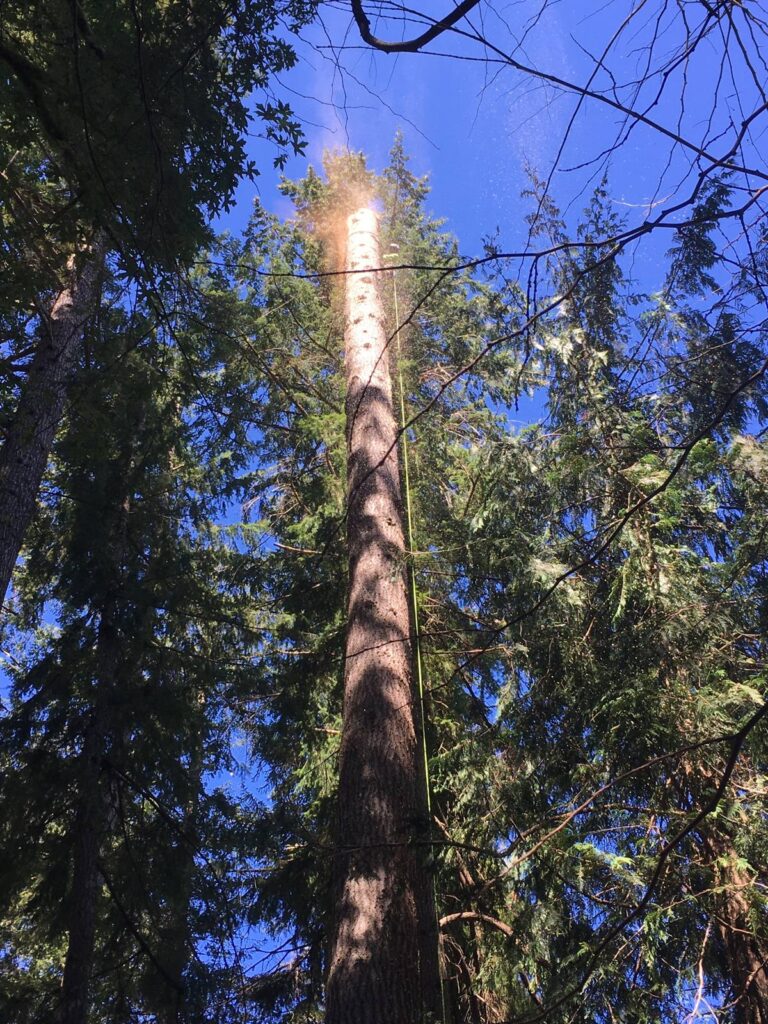
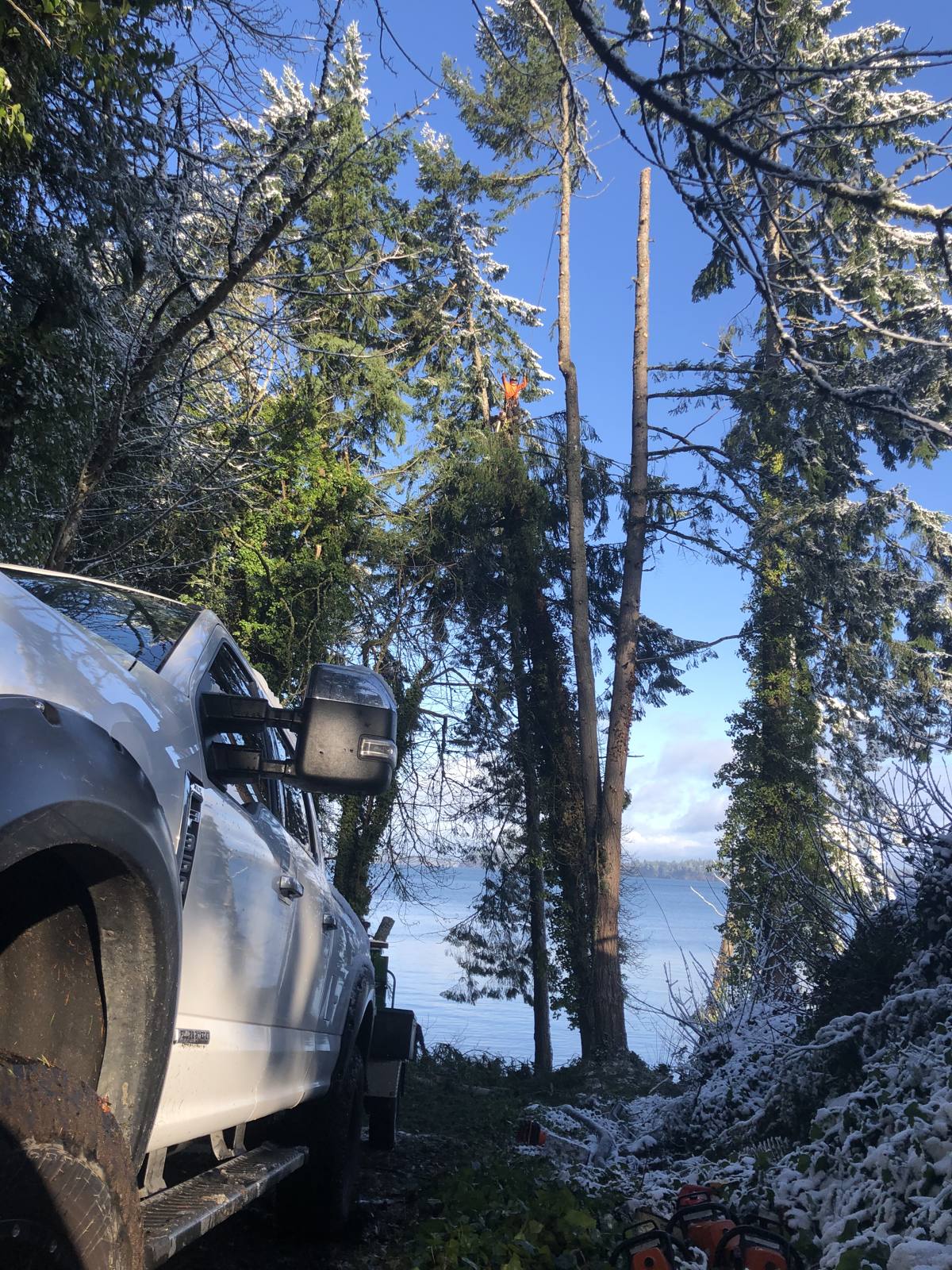
You can’t drain November or replant the forest, but you can fix the sail. Wind-sail reduction selectively thins the canopy so storms blow through the crown instead of pushing on it, cutting the load those wet roots must resist. Done before storm season on exposed trees near structures, it’s the single highest-value preventive job in PNW tree care. Multi-topped trees add cabling to the toolkit.
If one of your trees leans a little more after every storm, that’s not a quirk. That’s a progression. Send us photos; the first read is free, and October is worth a thousand February emergencies.